Six Sigma Green Belt Certification
You are one decision away from a great career.
Six Sigma Green Belt eLearning and Certification Exams
180-day Access: P10,000
comes with free 90-day Access Six Sigma Yellow Belt training & certification worth P1,500

ARE THERE PREREQUISITES?
- There is no formal prerequisite for this course.
- Anyone with or without Six Sigma experience may enroll.
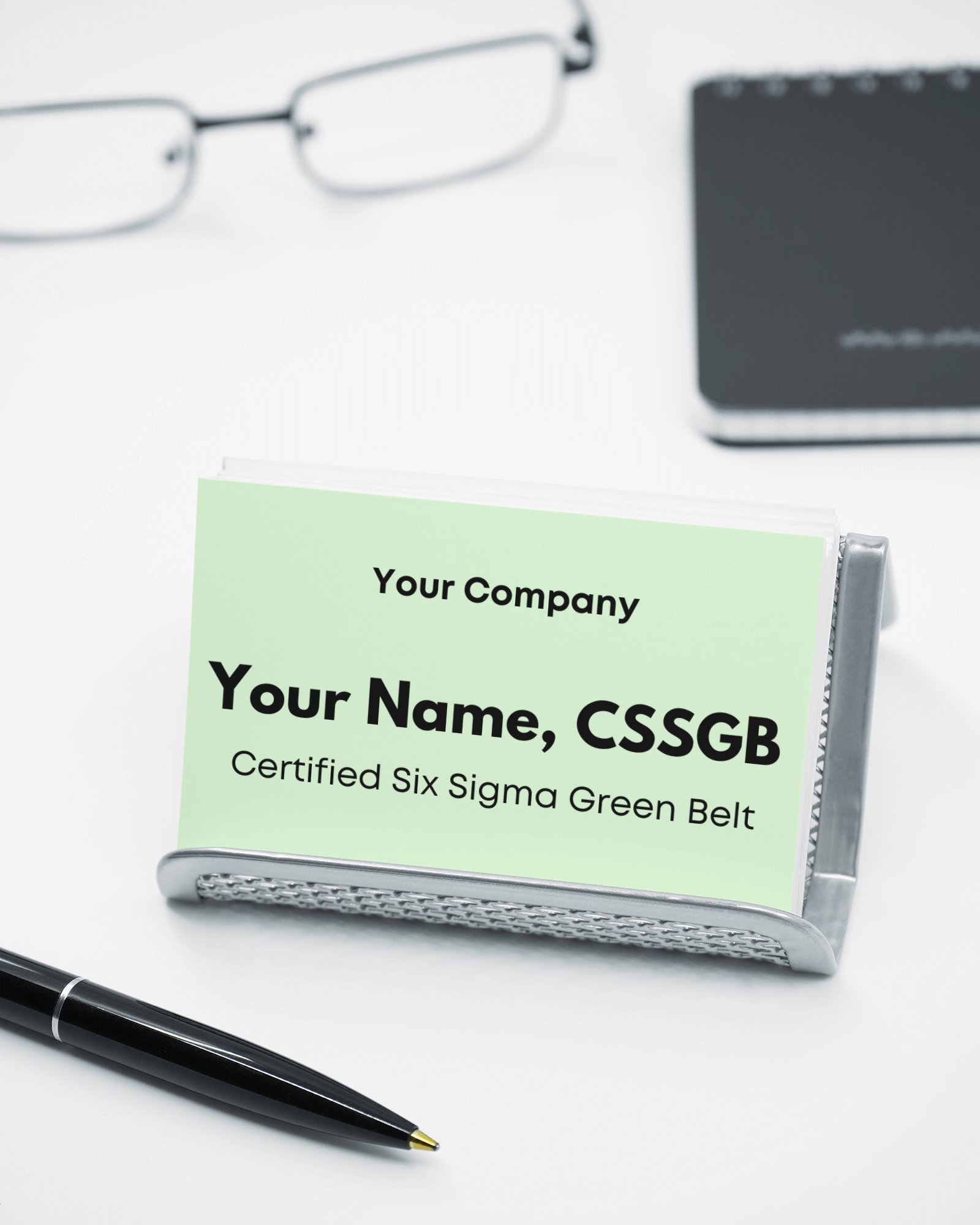
NOTE: Jackets, Hoodies, Shirts, and Business Cards on the image are NOT included; only for presentational purposes.


WHAT'S IN IT FOR YOU?
Six Sigma Green Belt concepts, tools, and frameworks that make you stand out, be valued, and feel fulfilled at work.
OVERVIEW
- The Six Sigma Green Belt course (SSGB™ accredited by 6sigmastudy, A Global Accreditation Body for Six Sigma Certifications) focuses on providing students with an understanding of the various Six Sigma tools & techniques. These tools & techniques help improve the process and minimize defects in the end product.
- Six Sigma Green Belts are a company's process problem solvers.
- Upon completion, this program will help you strengthen your organization by understanding, interpreting, and using the core concepts of Six Sigma. Designed for professionals with little or no prior experience with Six Sigma methodologies, this course helps develop the critical skills required for participating in successful Six Sigma projects.
RECOMMENDED FOR
- For all Supervisors and Managers who are tasked not only to manage processes but improve them over time.
- For Leaders and to-be Leaders who are aggressive in learning techniques & operational excellence best practices.
- For executives who want to have a working knowledge of Six Sigma methodology and tools. The program would equip Executives to improve project sponsor management.
- For Entrepreneurs, regardless of industry, to think in terms of process, & in turn, reduce the cost of poor quality: process delays, process defects, and variations.
- A MUST for Quality, Process Improvement, and Operational Excellence professionals.
Six Sigma Green Belt Curriculum
Everything included in the Six Sigma Yellow Belt course plus:
Introduction to Six Sigma
- History of Quality
- Evolution of Six Sigma
- Defining Six Sigma
- Overview of the DMAIC
Stakeholders & setting up a Six Sigma Project
- Identifying, Documenting stakeholder requirements
- Identifying stakeholders & customers
- Data collection & analysis
- Determining critical requirements
Project Selection Criteria
- Identifying performance metrics
- Using Financial criteria to evaluate project benefits
- Maximizing project benefits for the organization
Project Planning
- Creating Project Charter
- Charter Negotiation
Managing Team Dynamics
- Initiating teams
- Stages of team evolution
- Maslow’s hierarchy of needs
- Motivation Techniques
- Conflict Resolution Techniques
- Management / Leadership styles
- Roles played by people in a project
Important project management & planning tools
DEFINE
Tools
- Organization hierarchy
- High-level process maps
- Pareto charts
- Idea generation tools
Outputs
- Project charter
- Established metrics
- Problem statement
- Roles & responsibilities
MEASURE
Tools
- Data collection tools techniques
- Measurement scales
- Validation techniques (Gauge R & R)
- Statistical distributions
- Data mining
- Run charts. Process map
- Stakeholder tools
- Process costs
Outputs
- Well-defined processes
- Baseline process capability
- Process parameters affecting CTQs
- Cost of poor quality
- Measurement system
ANALYZE
Tools
- Ishikawa diagram
- FMEA
- Hypothesis testing
- Process capability
Outputs
- Important causes of defects
- Special & common causes of variation
- DPMO & sigma level
IMPROVE
Tools
- ROI
- Solution design matrix
- Design of experiment
- Taguchi robustness concepts
- Response surface methodology
- Project planning & management tools
- Prototypes
Outputs
- Cost/benefit different solutions
- Selection of solutions
- Implementation plan
CONTROL
Tools
- Control plan
- Statistical process control
- Lean Enterprise
- 5S
- Kaizen
- Kanban
- Total productive maintenance
- Measurement system reanalysis
Outputs
- Implemented solutions
- Revised measurement system
- Control plan for sustaining benefits. Improve process capability
- Lessons learned
Case Studies
Six Sigma course content is subject to change without prior notice.
WHAT IS INCLUDED IN THIS COURSE?
- Six Sigma Yellow Belt Training (elearning) FREE (worth P1,300)
- Six Sigma Green Belt Training (eLearning) 180-day access
- High-Quality Videos - All Chapters
- Downloadable Study Guides, Podcasts, Terms and Concepts - All Chapters
- Case Studies
- Mobile App
- Certification Exams
- Six Sigma tools: Templates and Worksheets
- Downloadable Digital Certificate (No printed option)
HOW TO BECOME SIX SIGMA CERTIFIED?
- Enroll in the course.
- Start your training.
- Take the certification Test and earn your Six Sigma Green Belt certification (Project is optional).
CERTIFICATION EXAMS FORMAT
- Proctored Online Exam
- 90 Questions
- 120 minutes
- One mark awarded for every right answer
- No negative marks for wrong answers
- Two exam retakes are free. Fourth and succeeding attempts will incure charges.
WHO IS THE INTERNATIONAL CERTIFICATION BODY?
6 Sigma Study, a Global Accreditation Body for Six Sigma Certifications, is the certification exam and issuer.
HOW SOON CAN I FINISH AND EARN MY SIX SIGMA GREEN BELT CERTIFICATION?
Past students have completed the program and have been certified in about 15 to 30 days. Time would depend on the time you commit to the program.
You may complete the course within 180 days after issuance of the course credentials.
HOW TO START?
- Enroll (You may pay via BPI, Gcash, Maya).
- Receive your login credentials and Start Your Online Learning.
- Take the certification Test after completing the Six Sigma Green Belt course (test should be taken within the 180-days access).
Pay Using Gcash, Maya, or BPI
SIX SIGMA GREEN BELT: P10,000.00
INSTRUCTIONS:
- Scan the QR code (using Gcash, Maya, BPI, others) and pay the course fees.
- Email the payment confirmation, FULL NAME, and EMAIL of the student to take the course. Send to ask@elearningasean.com
- Please give us 1 to 3 days to process (Usually it takes only one business day). We'll send the student the course credentials.